Flood Determinations
Why Order From MyFloodStatus?

Superior Accuracy
Precise data on structure and flood zone location is key to knowing your true flood status. Flood Insurance is required on a federally-backed loan for any structure that touches a Special Flood Hazard Area (SFHA), according to NFIP Guidelines.

Detailed Maps
You deserve greater clarity. We surpass industry standards by delivering precise, accurate mapping detail of property boundary, structure location and more based on FEMA’s current, effective FIRM (and Preliminary FIRM if existing).

Expert Support
Every MyFloodStatus Flood Determination is insured with $3M E&O insurance, and includes support from our expert team. We are here to explain report findings and provide expert guidance in any next steps or mitigation efforts.
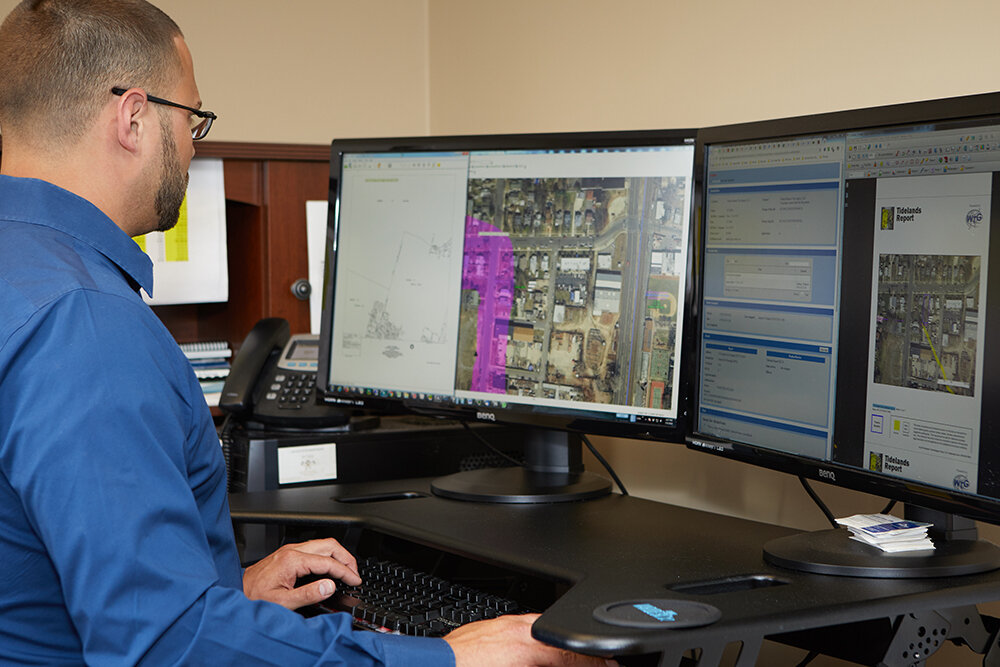
Can’t Find Your Address on a FEMA Flood Map?
MyFloodStatus takes the guesswork out of confirming your FEMA flood status. Get official, certified proof of flood zone status of any structure nationwide quickly, and accurately.
About Flood Zones
-
Flood zones are geographic areas defined by FEMA that indicate a property’s level of flood risk. These zones are shown on Flood Insurance Rate Maps (FIRMs) and are used to determine flood insurance requirements, guide lending decisions, and assess potential exposure to flooding.
-
Flood zones are grouped by level of risk. High-risk zones (such as A and V zones) have a 1% annual chance of flooding and typically require flood insurance. Moderate-risk areas (shaded Zone X) have a lower probability but still carry some risk, while low-risk areas (Zone X) are outside mapped floodplains—though flooding can still occur in any zone.
-
High-risk flood zones are FEMA’s Special Flood Hazard Areas, or SFHAs. These are areas with a 1% annual chance of flooding (aka “100-year floodplain”). Structures in these zones require flood insurance if the mortgage is from a federally-backed lender.
These are all zones that start with A or V.
Zone A
Areas with a 1% annual chance of flooding, but without detailed Base Flood Elevation (BFE) data.Zone AE
Areas with a 1% annual chance of flooding where BFEs have been established.Zone AH
Areas with a 1% annual chance of shallow flooding (usually 1–3 feet), with BFEs defined.Zone AO
Areas with a 1% annual chance of shallow flooding from sheet flow, with average flood depths provided.Zone VE
Coastal areas with a 1% annual chance of flooding, wave hazards, and established BFEs. These are among the most restrictive and highest-risk zones. -
Zone X (0.2%) (Moderate Risk / Shaded)
Areas of 0.2% annual chance flood; Areas of 1% annual chance flood with average depths of less than 1 foot or with drainage areas less than 1 square mile; Areas protected by levees from 1% annual chance flood.May be labeled as X (shaded) or B. Flood insurance is not usually required but is recommended.
Zone X (Minimal Risk)
Areas outside the 0.2% annual chance floodplains. May be labeled at Zone X (unshaded) or C.Zone D (Other)
Areas where flood risk has not been determined. These zones require further study, and flood insurance is optional but often recommended. -
Base Flood Elevation (BFE) is the expected height floodwaters may reach during a 1% annual chance flood event. It is used to guide building standards and plays a key role in determining flood insurance premiums, especially in high-risk zones.
-
Yes, flood zones can change over time due to new data, development, environmental changes, or updated FEMA studies. These updates can impact insurance requirements, property values, and development considerations. We include Preliminary FIRMS that show proposed changes, wherever they are available.
-
Free online resources can be very misleading or inaccurate.
If you need help determining a property’s flood zone or understanding what it means for your transaction, our team is here to help. Get in touch or request a flood zone determination to move forward with confidence.
Online Flood Map Search Isn’t Enough
One address can be shared by two distinct properties, with different flood zone designations. This is why online flood zone searches by address can create confusion when determining official FEMA flood zone status.
The images shown below are two different properties with the same exact written address (street, city, state and zip), but as you can see by our color-coded mapping, their flood status is vastly different.
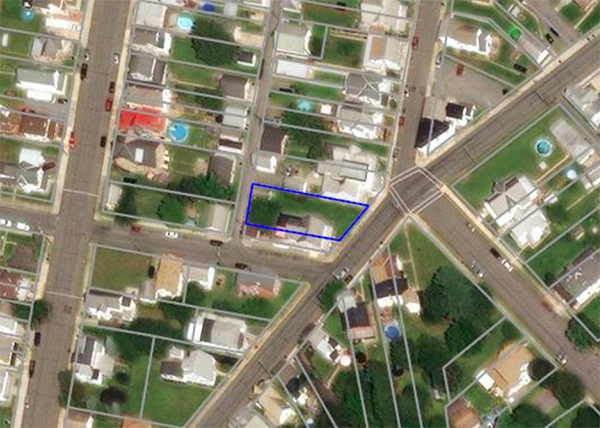
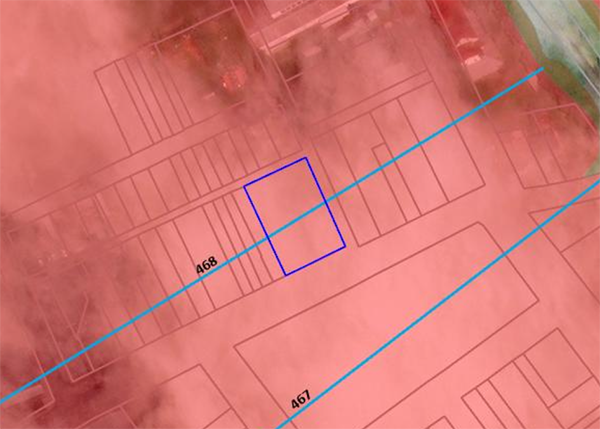
Same Address, Different Properties
Here’s why precision and expertise matter:
Identifying the right property requires more than an address.
First, we ensure we’re performing a determination on the correct property. We look deeper to identify block, lot and other specific property characteristics to distinguish between properties that may otherwise appear identical.
More than a lookup—it’s a deeper review. Our process is designed to reduce ambiguity and provide confidence that the flood determination corresponds to the intended property, eliminating issues that can otherwise emerge.
Our Flood Determination Report is official, certified, insured with $3M E&O and includes the full support and guidance of our team of Certified Floodplain Managers and other flood mapping industry experts.

How to Challenge Your Flood Status in 3 Easy Steps
The path to clarity and confidence is simple; it all starts with ordering a MyFloodStatus Flood Zone Determination Report.
“I wanted to let you know how valuable your reports are. They’re an essential tool for both home sellers and buyers.”
— Pamela M., Coldwell Banker Residential Brokerage
Frequently Asked Questions
What is a flood determination?
A flood determination, often referred to as a flood certificate, provides information about a specific property or structure with relation to flood zones, including Special Flood Hazard Areas. The primary document in a flood report is the Standard Flood Hazard Determinatioin Form, or SFHDF. Our reports to deliver superior precision and clarity, visual verification maps that show you where the flood zones are compared to your property boundary or structures, and unparalleled support.
Can I use a flood determination to challenge my current flood status?
Yes. In fact, thousands of properties nationwide have been previously mis-identified. Moreover, new FEMA maps are being released each year which can render old determinations useless. A MyFloodStatus flood determination report will confirm the true flood status of any property, and include both a current and preliminary map. Our experts can advise on opportunities to challenge your current flood status by securing an Elevation Certifiicate or a Letter of Map Amendment.
Can you help remove a mandatory flood insurance requirement?
This process always starts by ordering a flood zone determination report to confirm if your structure is within a Special Flood Hazard Area, or has the potential to be removed by ordering an Elevation Certificate or Letter of Map Amendment. Our experts can then consult, advise and guide you through the process.
Are your flood determination reports insured?
Yes, each MyFloodStatus flood zone determination report is backed with $3,000,000 Errors & Omission insurance.
If a high-risk zone touches my property, but not my home, do I need flood insurance?
National Flood Insurance Program (NFIP) guidelines only refer to the structure location in relation to the high-risk zone. If your property touches a high-risk zone, but your structure does not, flood insurance is not required under NFIP. This is why the precision of our reports is so important.
Why are MyFloodStatus flood determinations better than other available resources?
We offer a particularly exceptional and accurate report, thanks to superior technology, mapping assets and expert analysis that has raised the bar in the industry. Our reports are pinpoint accurate, certified and insured, complete with visual verification maps utilizing both current FEMA maps as well as preliminary maps.
Are you using the new maps for your flood determination reports?
The idea of “new” vs. “old” maps is a misconception. There are current maps, called “effective” maps that we use for our determinations. Then there are “preliminary” maps designed to give a glimpse at the future, but not to be used as the basis for an official flood determination.
Can you help me understand my report and my options?
Aboslutely. We pride ourselves on offering detailed personalized service that you won’t find at any “big box” flood providers. Our trained experts are here to examine your reports personally, advise and guide you on any opportunities we see to challenge your flood status.
How quickly will I get my flood search results?
A report is emailed to you in PDF form within 24 hours; most reports are completed within a few hours.
Which flood zones require me to get flood insurance?
Any structures on a property which fall inside SFHA zone A or V are required to get Flood insurance. EACH structure inside the SFHA is required to have its own separate flood insurance policy. ONLY structures are required to get flood insurance, if portions of the property are within a SFHA, but no structures are, flood insurance is NOT required.
What is a Non-Special Flood Hazard Area?
A Non-Special Flood Hazard Area (NSFHA) is an area that is in a moderate-to-low risk flood zone (Zones B, C, X Pre- and Post-FIRM). An NSFHA is not in any immediate danger from flooding caused by overflowing rivers or hard rains. However, it’s important to note that structures within a NSFHA are still at risk. In fact, one out of four floods occurs in an NSFHA.
How do I dispute my structure’s Flood Zone designation?
Have a professional engineer or surveyor produce a Flood Elevation Certificate (EC). A structure with a properly completed EC may qualify for removal from a particular flood zone. The structure or property can be removed by applying for a Letter Of Map Amendment (LOMA).
What is a Flood Elevation Certificate (EC)?
An Elevation Certificate is a document generated by an engineer, or surveyor, that can determine where precisely your home is located in relationship to the Base Flood Elevation. The Flood Elevation Certificate is a tool that FEMA uses to certify building elevations, and if the building is located in a Special Flood Hazard Area. You can order one through us or if you have one we can take a look and advise on next steps.
What is a LOMA?
You may request a Letter of Map Amendment (LOMA) or a Letter of Map Revision Based on Fill (LOMR-F) if you believe your property is not located in the designated 100-year floodplain [also known as a 1-percent-annual-chance floodplain, or Special Flood Hazard Area (SFHA)], as shown on the effective Flood Insurance Rate Map or Digital Flood Insurance Rate Map for your community and you would like the Federal Emergency Management Agency (FEMA) to make an official determination regarding the location of your property relative to the SFHA.
You can request removal of a property and/or structure from the SFHA, for a single residential lot or structure (MT-EZ), and for requests involving multiple residential lots or structures and for all LOMR-F requests (MT-1). You can order a LOMC or LOMA through us, and we can advise on all steps along the way.
